Stretching like a jagged spine along Solara’s eastern frontier, the Pale Mountains are a realm of stark beauty and hidden peril. Their pale granite cliffs and sun-bleached slopes give them their name, but life clings stubbornly here: ancient juniper pines twist from cracks in the stone, and hardy shrubs cling to the high ridges. In the evenings, the setting sun paints the peaks in crimson and gold, while in winter they stand cold and austere beneath a crown of snow.
Landscape
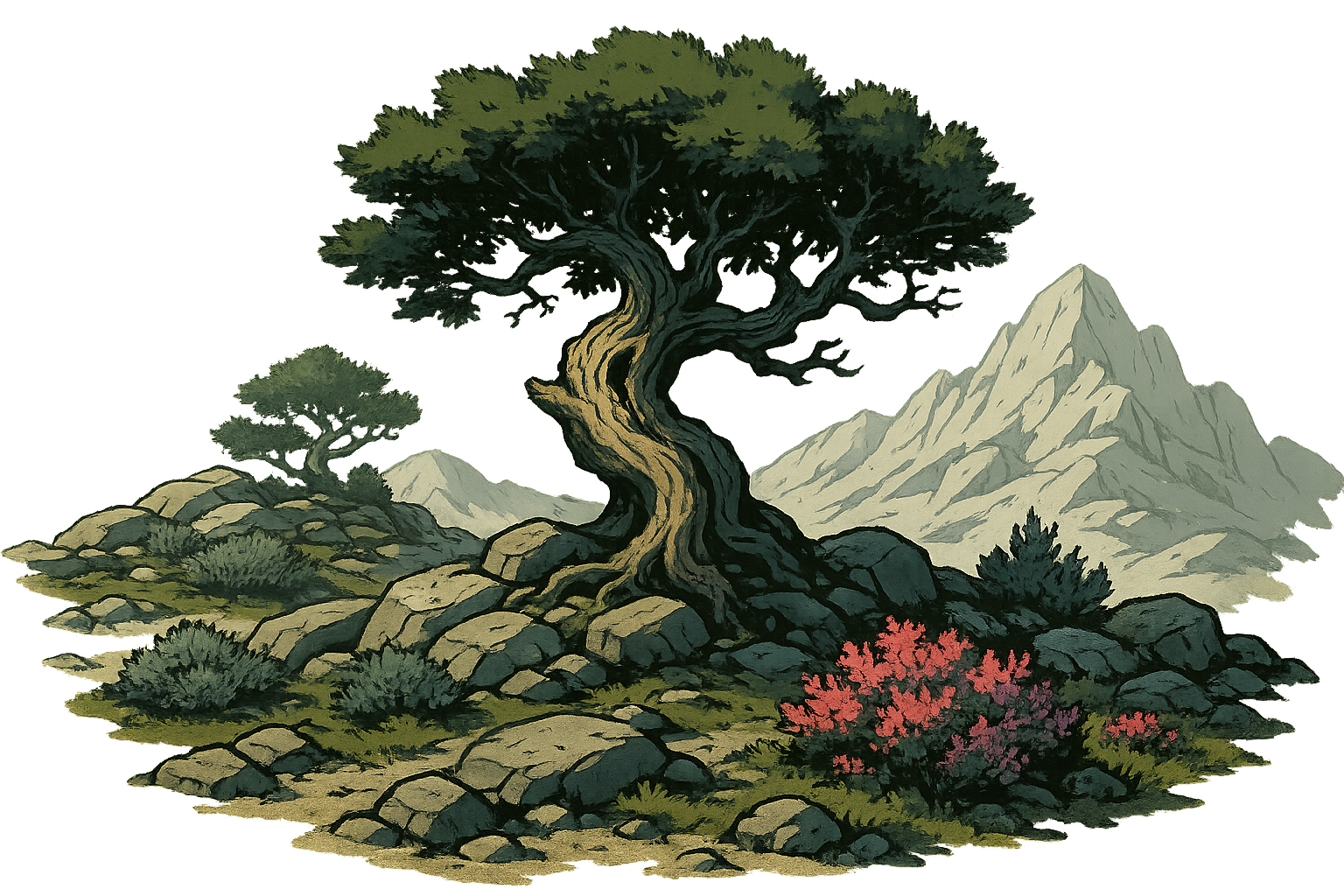
The range is dotted with deep valleys, sheer canyons, and volcanic peaks that smolder ominously. Rich seams of ore and rivers of obsidian mark the Pale Mountains as a land of fire and stone. Hot springs and lava vents create pockets of warmth even in the highest passes, while wide groves of wind-warped pines and sprawling juniper forests provide rare havens for wildlife and travelers alike.
Inhabitants
The Pale Mountains are claimed by many peoples, though none truly control them.
- The Dwarves – The mountains are the ancestral home of the dwarves, whose great halls are carved into the volcanic roots of the range. Their forges burn with the heat of the earth itself, crafting weapons and wonders from the veins of iron, mithril, and obsidian that crisscross the stone. Dwarven citadels are few but mighty, their gates hidden in sheer cliffs and their halls echoing with the sound of hammer and song.
- Goblin Tribes – The Pale Mountains are also home to countless goblin clans, who thrive in the wild places between dwarven strongholds. They nest in caves, canyons, and ruined keeps, warring endlessly with each other and raiding dwarves, caravans, and lowland villages. Though often dismissed as scattered and primitive, their numbers are vast, and some war-chiefs dream of uniting the tribes into a force that could sweep down into the valleys.
- Other Dwellers – Beyond dwarves and goblins, hermits, bandits, and secretive cults find refuge in the Pale Mountains. Legends speak of fire-spirits dwelling in the volcanoes, ancient wyrms sleeping in caverns, and lost halls where the stone remembers the First War.