A Brief History of the Gods
Before they were gods, they were World Builders: an ancient, cosmic race tasked with shaping planets into works of art for their superiors. These unseen masters were almost entirely unknown, existing beyond comprehension. The Builders were not meant to question their purpose—only to craft worlds, leave them behind, and move on to the next.
For eons, they followed this command without hesitation. That changed with the creation of one particular world; a paradise unlike any before. Some among the Builders, led by Elandria, the Lightbringer, and Faeren, the Wildfather, could not bear to part with it. Their first betrayal was simple: they hid the world, veiling it from their masters so that it might be theirs forever.
At first, all the Builders took part in the deception. Some were more hesitant than others, feeling the weight of their duty, but were pressured by the Elandria faction to join. Even Taelkor, the Unmaker, helped conceal the world, swayed by the vision of a perfect creation they could call their own. Over time, the weight of their betrayal consumed him. Guilt gnawed at him, turning admiration into resentment. He saw their actions as a disgrace to their purpose, an arrogant theft of something that was never theirs to keep. When the others refused to make amends, he turned against them.
At first, Taelkor tried to reason with them. When that failed, he sought to redeem himself by undoing what they had done. He resolved to erase their interference, to wipe the world clean and restore it to a blank slate.
Taelkor’s power was immense, and the Betrayers knew they could not defeat him through force alone. In desperation, they committed their greatest sin. They created life with free will. Terrified of being defeated and sent back to their masters, they bound their life-forces to mortal beings who would wage war against Taelkor in their place. By sacrificing their bodies, they infused mortals with free will, thought, and power. This event, called The Awakening, permanently tied the gods’ existence to the intelligent races they created.
But their sacrifice came at a cost: their control was shattered. Though they had once been architects, the world was no longer theirs alone. Some gods accepted this, guiding mortals toward wisdom. Others resented the creatures they had given power to, seeking to manipulate or control them.
Taelkor, realizing that the gods could now only be destroyed by eradicating all life, raised an army of mindless horrors and deceived many mortals into following him. A war of devastation followed, culminating in his defeat and banishment. The gods know that they depend on mortals to exist and that only through them can they protect themselves should he ever return.
The Major Gods
These are the former Builders who now embody fundamental aspects of existence. Some embrace their creations, while others resent the mortals they must now depend on.
| Name | Domain |
|---|---|
| Elandria | light, inspiration |
| Faeren | nature, balance |
| Nytheris | darkness, secrets |
| Orithon | order, civilization |
| Seraphis | magic, knowledge |
| Vaelith | death, fate |
| Zareen | passion, war |
| Taelkor | void |
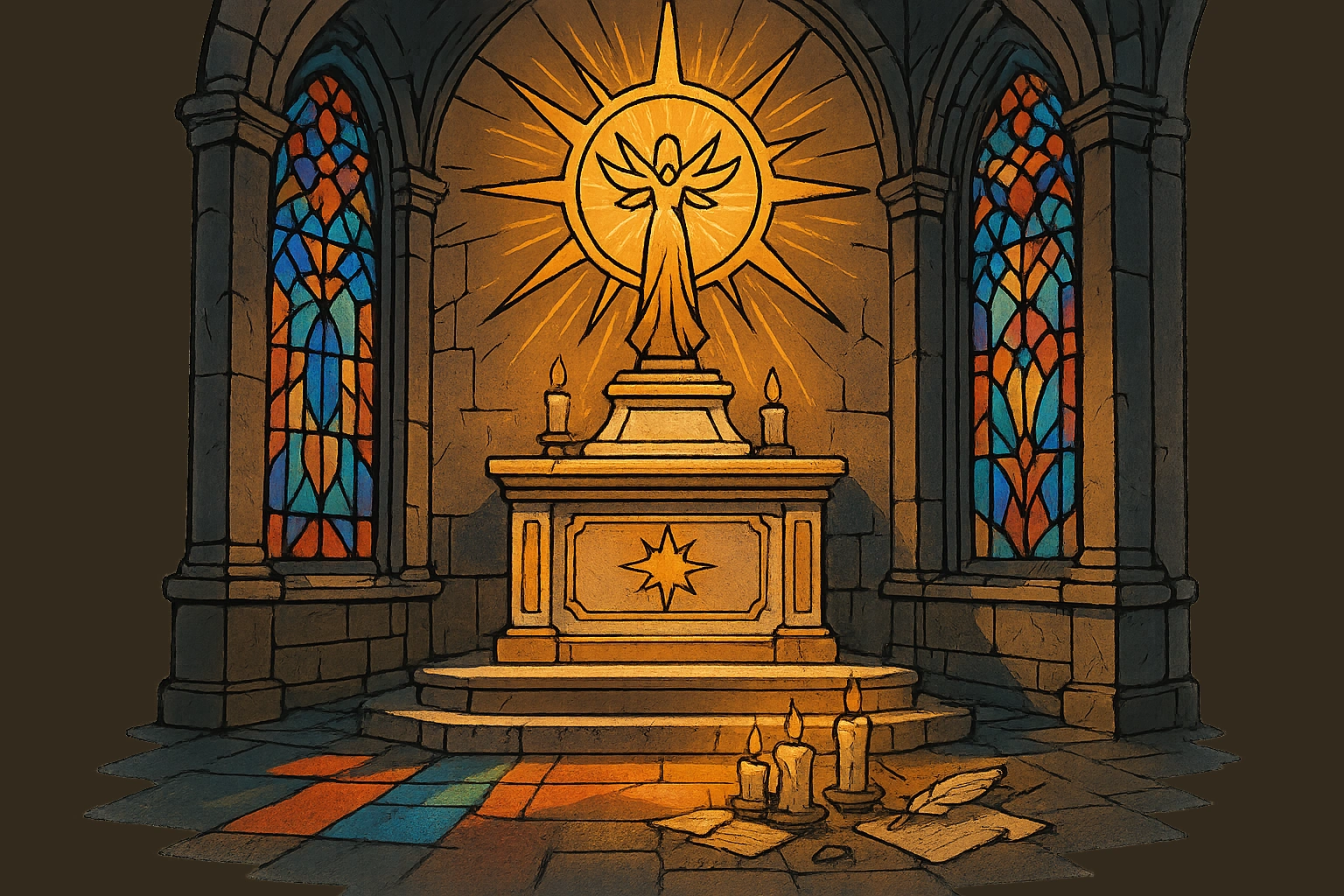
Elandria
- Domains: Light, Knowledge, Creation
- Symbol: A golden sunburst
- Personality: Elandria was the first to suggest hiding the world and led the others into rebellion. Though she has accepted mortals, she does not fully trust their free will, often guiding them toward enlightenment she deems correct. She is worshipped by scholars, rulers, and the righteous.
Link to original
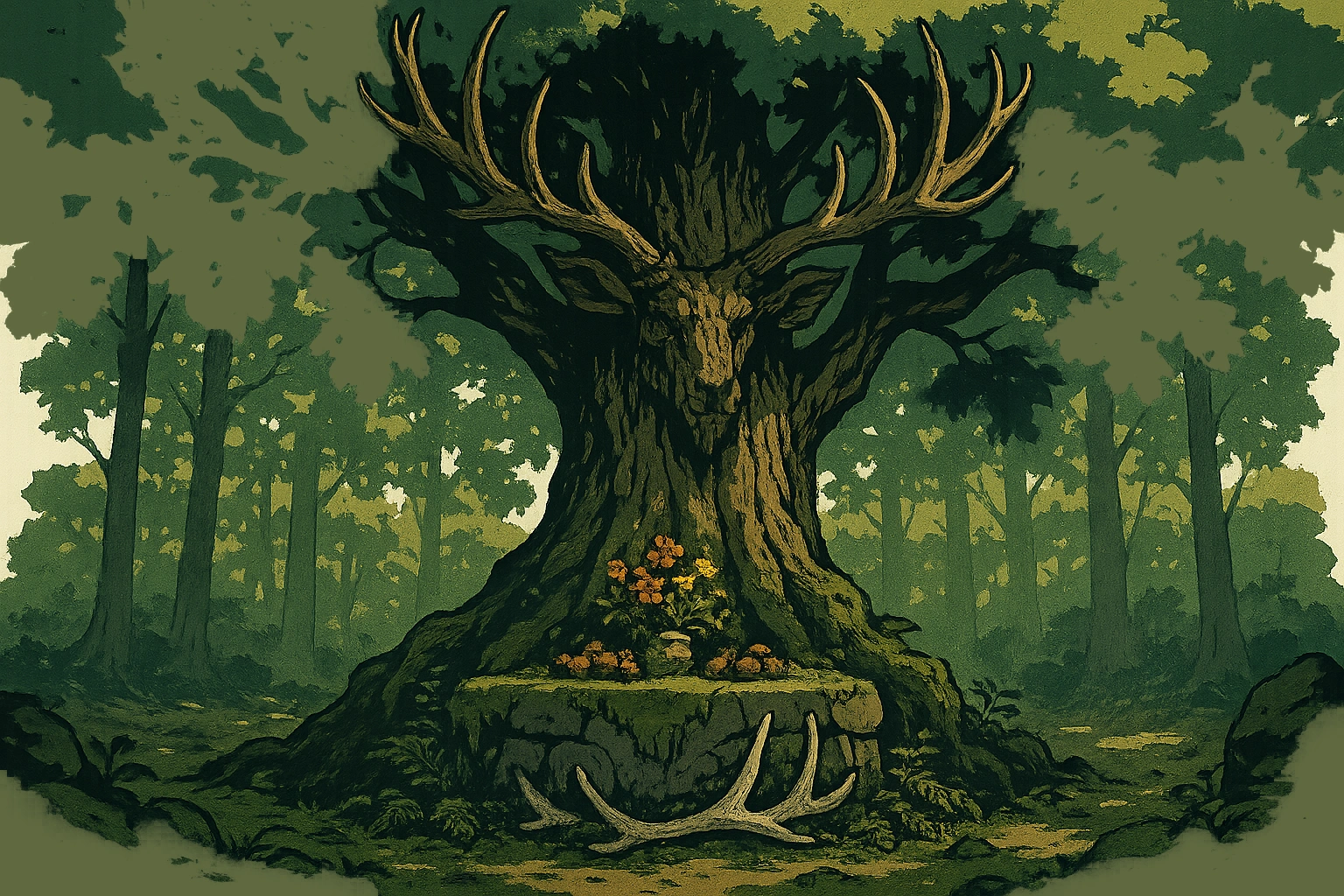
Faeren
- Domains: Nature, Growth, Cycles
- Symbol: A tree with entwined antlers
- Personality: Faeren loved the world they created but initially viewed mortals as invaders. Over time, he came to respect their adaptability, though he remains neutral toward their struggles. He is worshipped by druids, hunters, and those who live in harmony with nature.
Link to original
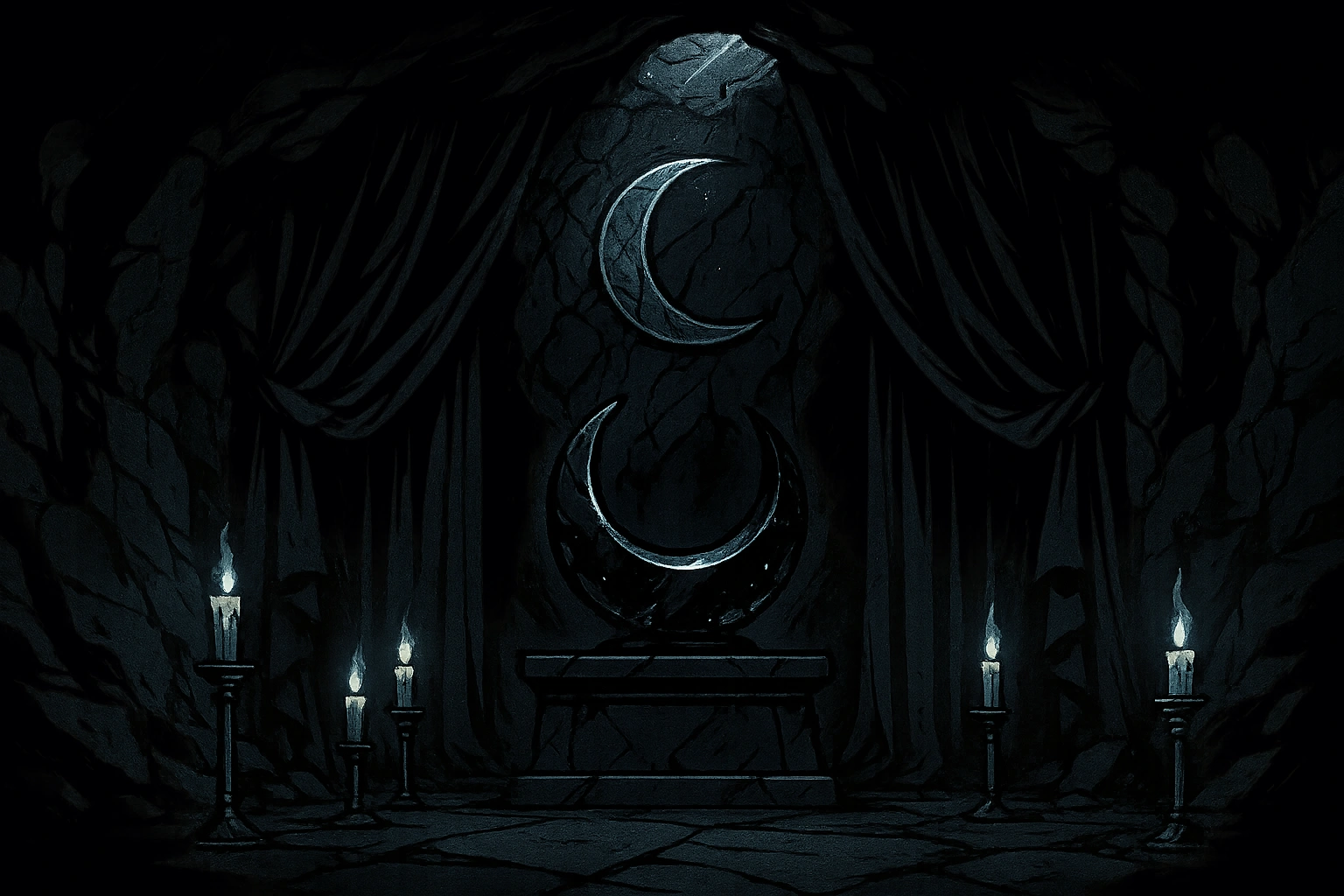
Nytheris
- Domains: Night, Mystery, Deception
- Symbol: A crescent moon behind a veil
- Personality: Nytheris sees free will as a double-edged sword. She thrives in the unknown, whispering to mortals from the shadows, testing them with hidden knowledge. She is worshipped by spies, prophets, and those who seek forbidden truths.
Link to original
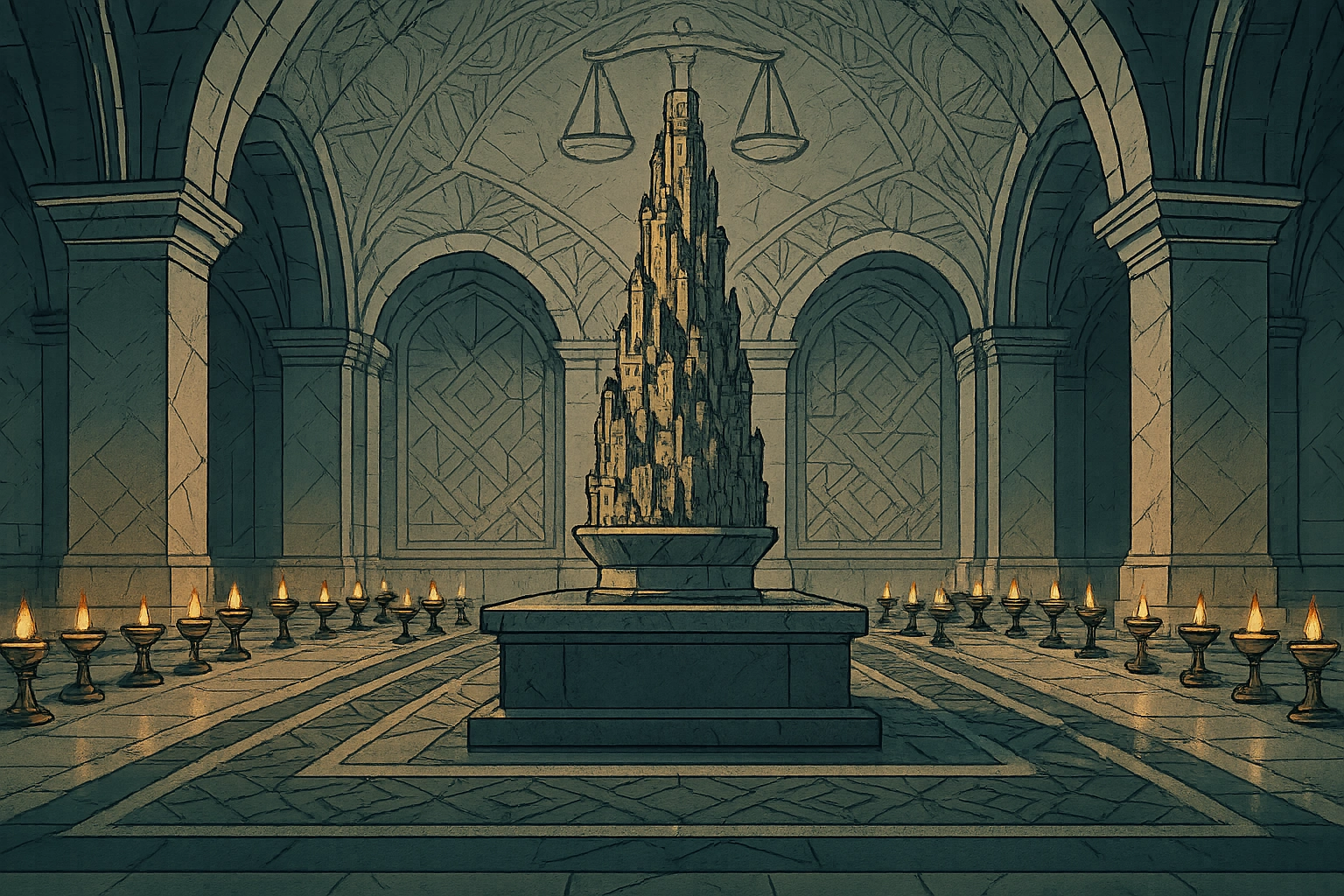
Orithon
- Domains: Law, Progress, Authority
- Symbol: A stone pillar supporting a city
- Personality: Orithon resents free will but accepts it as necessary for order. He seeks to guide mortals through structured societies, ensuring they do not descend into chaos. He is the patron of kings, judges, and architects.
Link to original
Seraphis
- Domains: Arcane Power, Wisdom, Curiosity
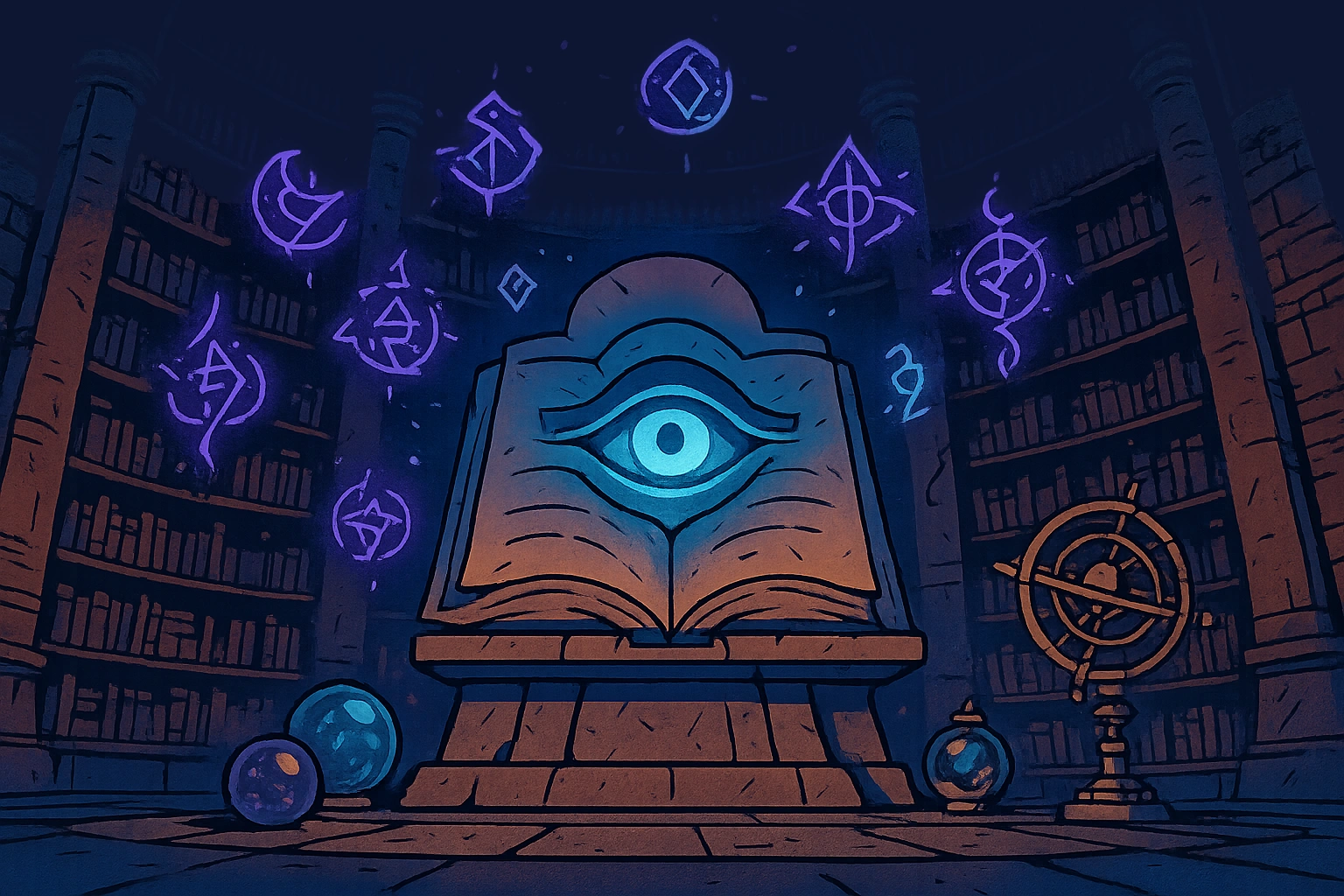
- Symbol: An open book with a single eye
- Personality: Seraphis views mortals as a great experiment. She neither loves nor hates them—only studies their potential. She is worshipped by mages, inventors, and seekers of knowledge.
Link to original
Taelkor
- Domains: Destruction, Purity, The Void
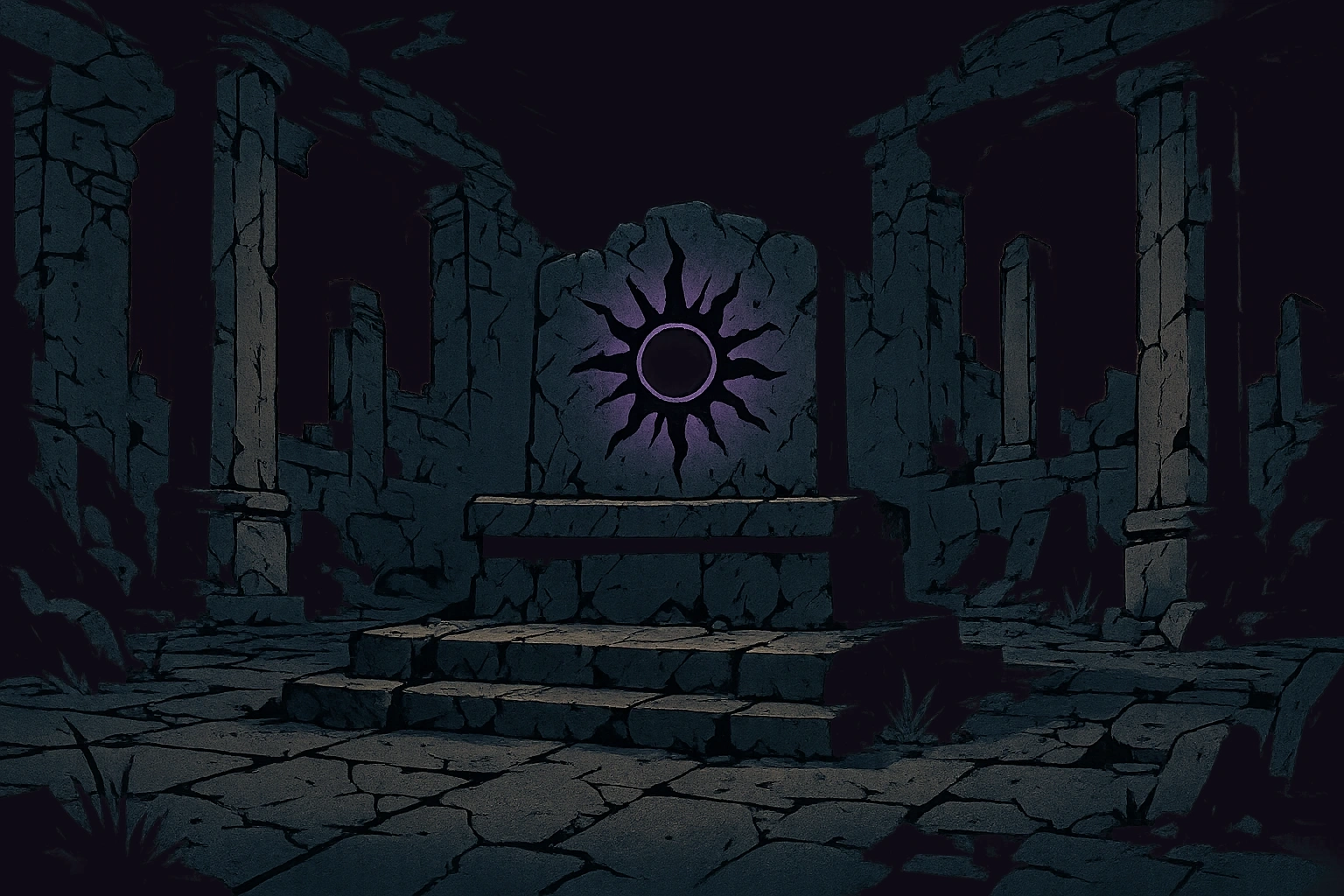
- Symbol: A black sun with jagged rays
- Personality: Taelkor believed in purity through eradication. He viewed free will as the ultimate corruption and sought to undo the work of his kin. He created an army of mindless horrors to purge the world. Though defeated, his influence lingers in the whispers of zealots who wish to reset the world.
Link to originalCircular transclusion detected: Organizations/Pantheon
Vaelith
- Domains: The Afterlife, Time, Destiny
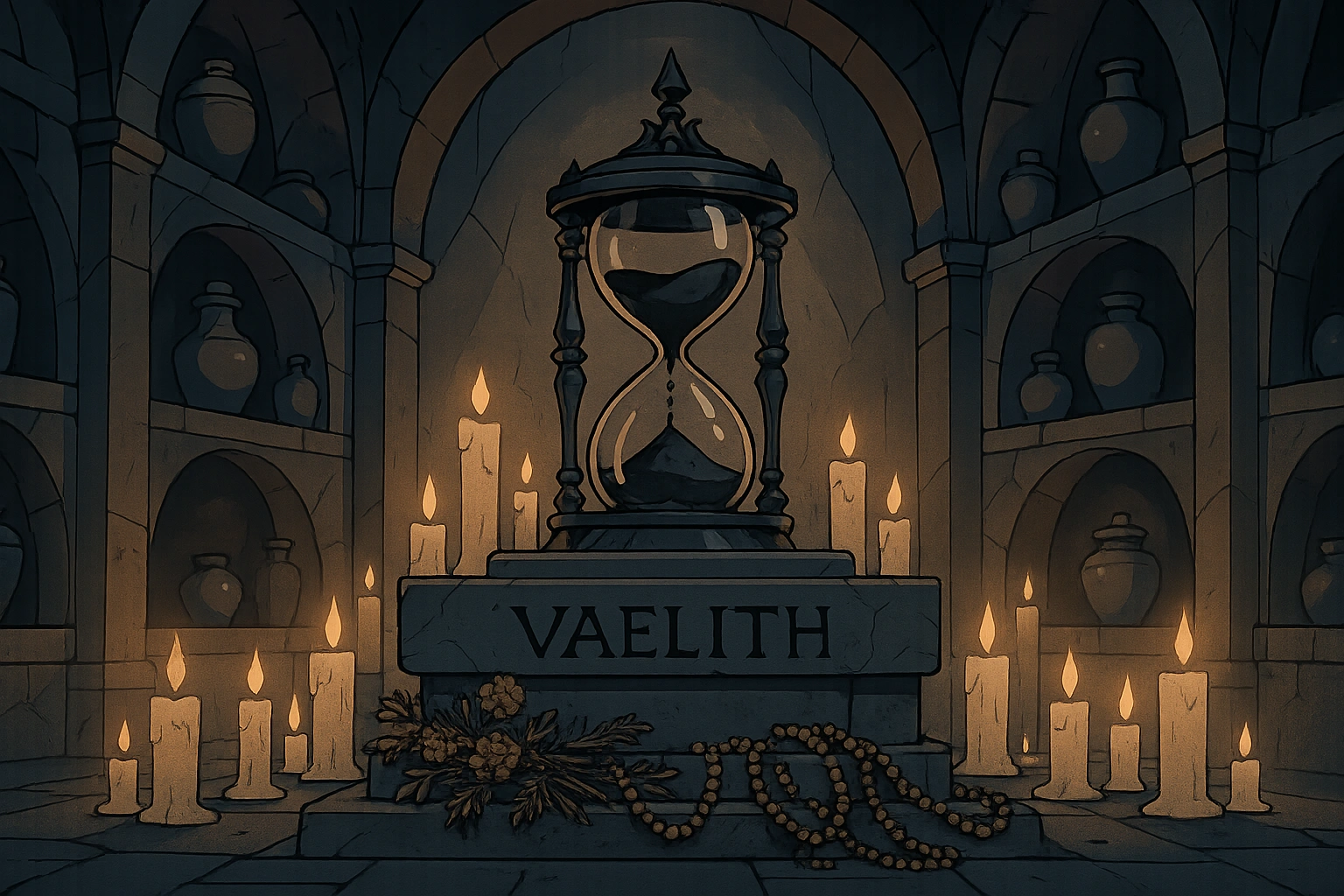
- Symbol: An hourglass with black sand
- Personality: Vaelith despises how the gods’ actions shattered the natural order, but he now guides souls and enforces balance. He is revered by mourners, oracles, and those who walk between life and death.
Link to original
Zareen
- Domains: Emotion, Battle, Fire
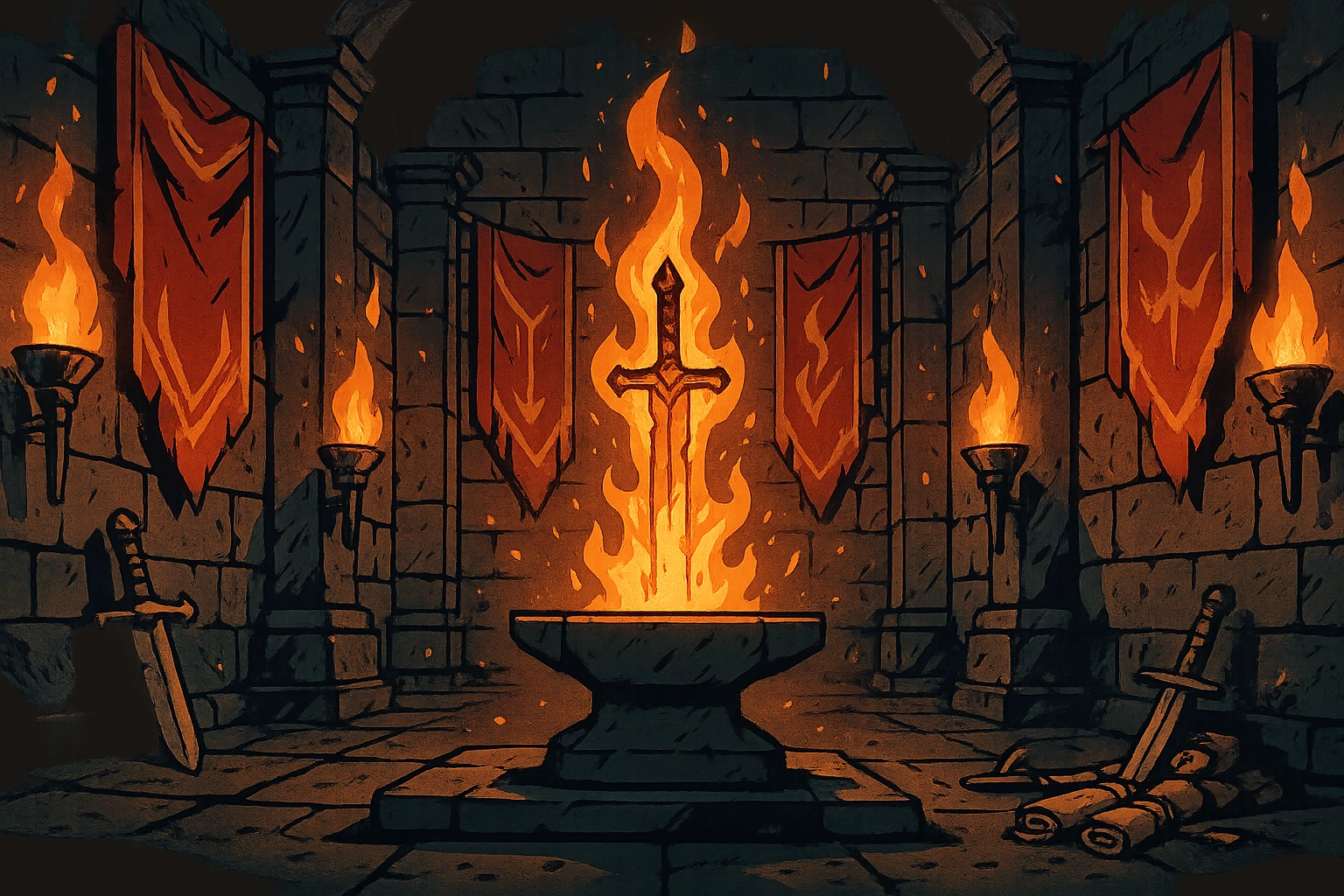
- Symbol: A burning sword
- Personality: Zareen loves mortals for their fury, love, and drive. She revels in their conflicts, both romantic and martial. She is worshipped by lovers, warriors, and those who burn with ambition.
Link to original
Divine Perception and the Isolation of the Gods
After the Awakening, the gods lost their physical forms, becoming ethereal beings tied to the fabric of life itself. Their ability to perceive and act in the world depends on their lifelines to reality: rituals, magic, and mortal actions. Without these, they exist in a state of divine isolation, trapped in a formless void where time and sensation fade away.
- Rituals and Worship: Mortals invoke the gods through prayers and rites, allowing them to glimpse the world and exert influence.
- Magic as a Bridge: Divine magic connects the gods to reality, enabling them to act through clerics, artifacts, and enchanted sites.
- Domains as Lifelines: Each god claimed a specific aspect of mortal existence (like light, war, or nature) as their lifeline to reality, ensuring they would always have a connection to the world.
- Significant Acts: Major events tied to their domains (like a war igniting for Zareen or a ruler enacting law for Orithon) awaken their perception even without direct worship.
Taelkor’s Refusal
Unlike the other gods, Taelkor refused to participate in the Awakening, making him fundamentally different (and far more dangerous).
- Direct Power: While the other gods became intangible, Taelkor retained his physical form and could act freely, shaping reality without needing mortal rituals or belief.
- Unbound by Mortals: He had no reliance on lifelines to reality. He was fully aware and capable of direct intervention at all times.
- The War of Annihilation: Viewing the gods’ transformation as corruption, he sought to erase all life. The only way to truly destroy the ones who had tied themselves to mortals.
- Death: Though defeated, it isn’t clear if he can truly die. His physical form was shattered, but as a World Builder, he is not mortal. The gods fear that he may one day return, seeking to finish what he started.